RSTLess group · Sapienza University of Rome

Language models that retrieve, reason, and act, reliably.

I am a Full Professor at Sapienza University of Rome and an ELLIS Fellow. My group studies how language models use external knowledge, what happens inside them, and how to make learning systems robust, fair, and transparent. Before Sapienza I worked at Yahoo Labs, Facebook Search, and Facebook AI Research.

—Publications
—A/A* conference papers
—Years active
Fabrizio Silvestri
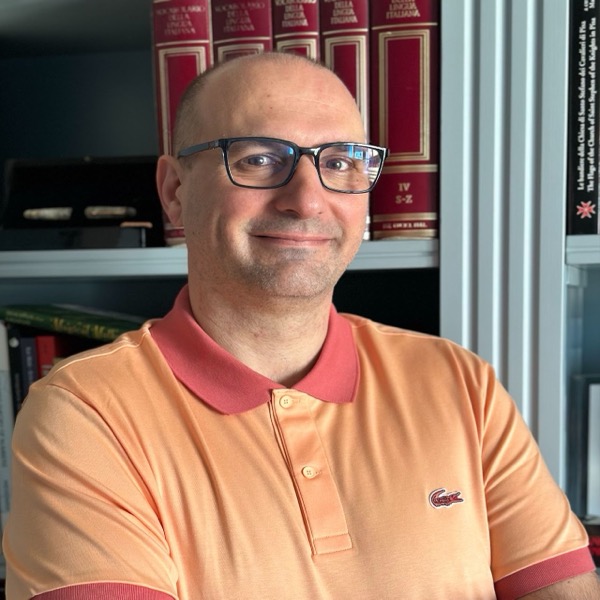
Fabrizio Silvestri Full Professor, DIAG · Coordinator, Ph.D. in Data Science

What we work on

The RSTLess group

RSTLess stands for Robust, Safe, and Transparent Machine Learning. We are Ph.D. students, postdocs, and collaborators at DIAG, Sapienza, working with partners in academia and industry.

Our work follows four lines:

  • Retrieval and RAG. How language models use retrieved evidence, how distractors mislead them, and how to evaluate retrieval when the reader is a model.
  • Interpretability. Attention, internal representations, sparse autoencoders, task vectors, and model merging.
  • Trustworthy learning. Unlearning, robustness, fairness, and counterfactual explanations.
  • Graphs and recommendation. Graph and sheaf neural networks, sequential recommendation, and recommender forgetting.

Many of our questions come from deployed systems. Before Sapienza I worked on query suggestions for Facebook Search and on misinformation detection at Facebook AI, and that experience shapes what the group works on.

About

Fabrizio Silvestri is a Full Professor of Computer Science at Sapienza University of Rome, where he leads the RSTLess research group on Robust, Safe, and Transparent Machine Learning and serves as Coordinator of the Ph.D. Programme in Data Science. He is a Fellow of ELLIS, the European Laboratory for Learning and Intelligent Systems. His research spans Machine Learning, Natural Language Processing (with applications to Information Retrieval and RAG), and Generative and Agentic AI, with a recent focus on the reliability and interpretability of large language models.

Before joining Sapienza, he spent several years in industrial research. At Facebook (now Meta), London, he first worked on Facebook Search, where he productionized the query recommendation system serving billions of users daily; he then joined Facebook AI Research (FAIR), developing models to detect and limit the spread of misinformation across Meta's platforms. Earlier, at Yahoo Labs (London and Barcelona), he worked on web search quality, query understanding, and sponsored search, and before that he was a Senior Researcher at ISTI-CNR in Pisa.

He has authored nearly 200 peer-reviewed publications — more than 60 at CORE A/A* conferences (SIGIR, WWW, KDD, CIKM, WSDM, RecSys, ACL, EMNLP, NeurIPS, IJCAI, ICDE, ICDM, CVPR) and nearly 30 in Scimago Q1 computer-science journals — and his work has accumulated over 11,000 citations on Google Scholar. He regularly serves on the organizing committees of international conferences and workshops, including roles as General Chair, Program Chair, and Area Chair at leading venues in machine learning, natural language processing, and generative AI.

Contact

Office

DIAG — Dipartimento di Ingegneria Informatica, Automatica e Gestionale
Sapienza University of Rome
Room B209, Via Ariosto 25, 00185 Rome, Italy

Publications

Auto-synced nightly from OpenAlex. Last updated —.

Type
Topic

Loading publications…

Teaching

I coordinate the Ph.D. Programme in Data Science at Sapienza University of Rome. I currently teach the following courses:

  • Applications of Machine Learning — taught in Italian.

  • Graduate course on generative models, LLMs, and agentic AI — taught in English.

  • NLP Module — Natural Language Processing and Text Mining EN

    Module on modern NLP within the joint Natural Language Processing and Text Mining course.

  • Artificial Intelligence, from the Inside EN

    Ph.D. Soft Skills course on AI for doctoral students of every discipline — no mathematics, no programming.